How Accurate is a TDEE Calculator? Science & Calibration
Explore clinical findings on how accurate is a TDEE calculator in real life. Discover why formulas overestimate and learn a 14-day calibration method.
⚡ Quick Summary and Key Takeaways
Explore clinical findings on how accurate is a TDEE calculator in real life. Discover why formulas overestimate and learn a 14-day calibration method.
When you enter your age, weight, height, and activity level into an online calculator and it displays 2,342 calories, it is natural to ask:
When wondering how accurate is a TDEE calculator, is that number a scientific fact, or just an estimate?
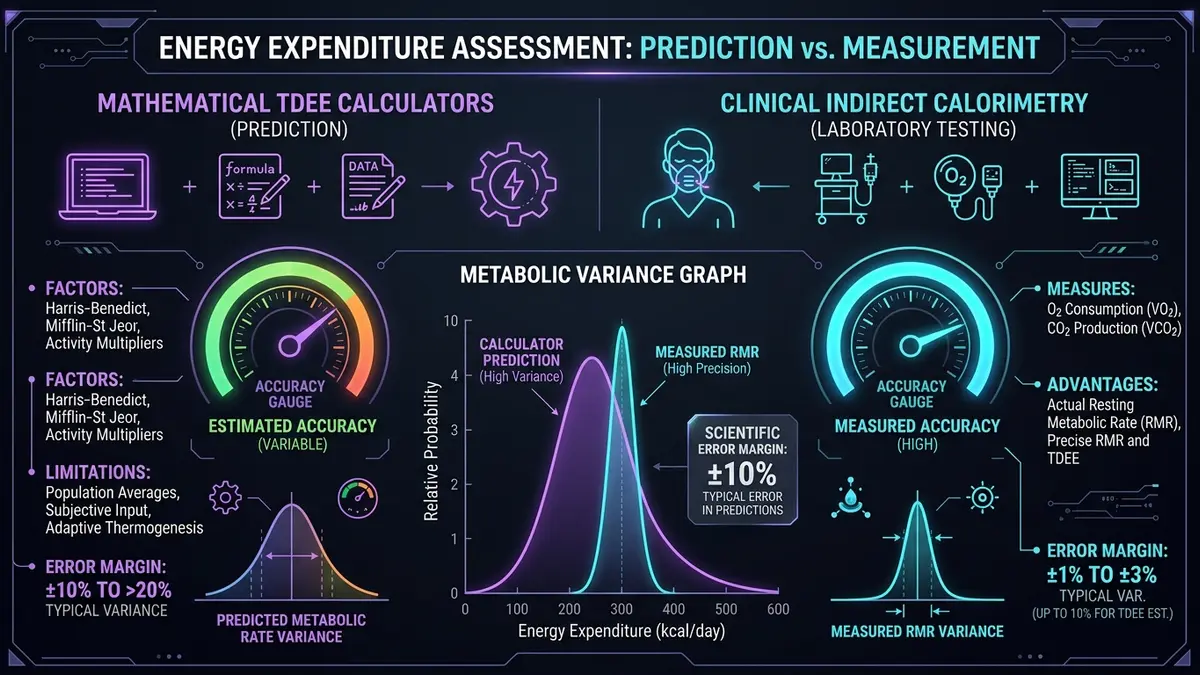
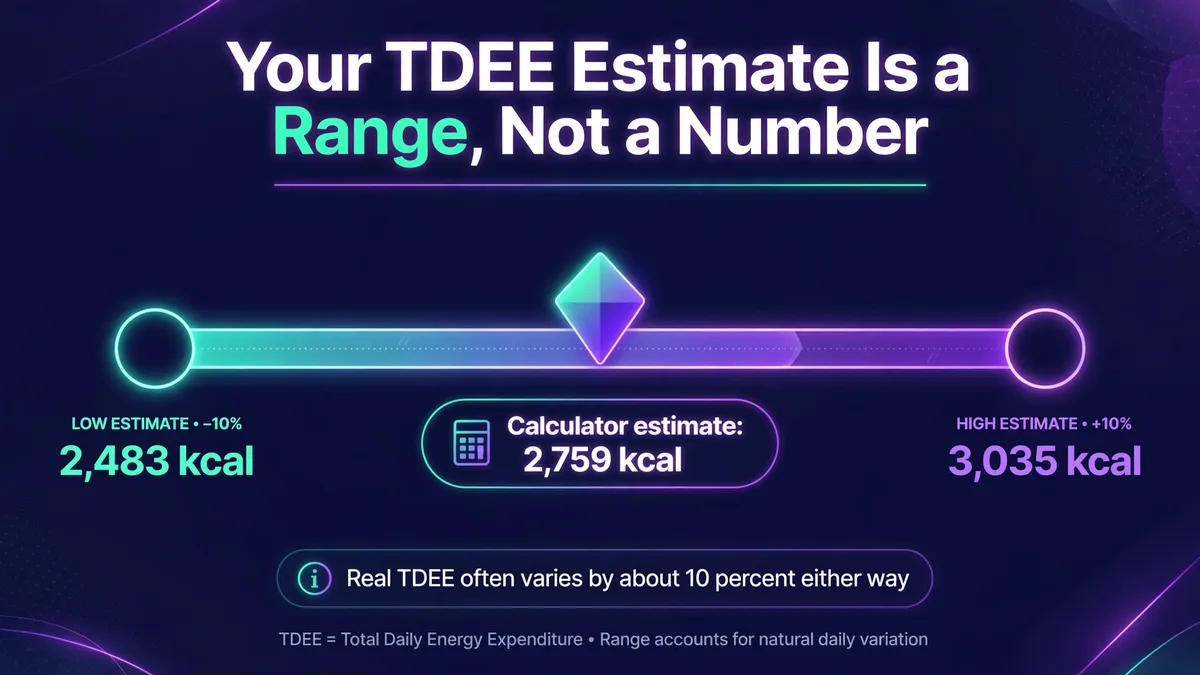
The short answer is: An online TDEE calculator is an evidence-based starting estimate, typically accurate to within plus or minus 10% to 15% of your true biological energy expenditure.
For a person whose calculated TDEE is 2,200 calories, their actual burn in a metabolic chamber could realistically range between 1,950 and 2,450 calories per day.
Understanding why this margin of error exists, and how to quickly calibrate the calculator to find your exact personal number, is the key to breaking through stubborn weight loss plateaus.
What Does Research Say: How Accurate is a TDEE Calculator?
Scientists measure human metabolic burn using two laboratory benchmarks:
- Direct & Indirect Calorimetry: Measuring heat dissipation or oxygen consumption and carbon dioxide production in sealed metabolic rooms.
- Doubly Labeled Water (DLW): Drinking water enriched with stable isotopes and tracking isotope clearance via urine over 14 days (the undisputed gold standard of free-living energy expenditure).
When clinical researchers ask how accurate is a TDEE calculator by comparing formulas against Doubly Labeled Water studies, here is how the primary equations perform:
| Formula | Scientific Accuracy Rate (within 10% of actual) | Best Used For |
|---|---|---|
| Mifflin-St Jeor | 82% of individuals | General population, both normal weight and obese individuals |
| Katch-McArdle | 80% of individuals | Lean individuals and athletes with confirmed body fat percentages |
| Revised Harris-Benedict | 70% of individuals | Clinical settings; tends to overestimate BMR by ~5% in modern sedentary populations |
The Mifflin-St Jeor equation remains the most reliable baseline tool available today. Our Free TDEE Calculator defaults to Mifflin-St Jeor precisely because of its superior performance in contemporary clinical trials.
The 4 Primary Reasons TDEE Estimates Vary in Real Life
When examining how accurate is a TDEE calculator in real-world application, the discrepancy almost always stems from four physiological and behavioral factors:
The discrepancy almost always stems from four physiological and behavioral factors:
1. The Human Activity Overestimation Bias
By far the single greatest source of error is the Physical Activity Level (PAL) selection. A person who works 8 hours at a computer and attends a 45-minute gym session on Monday, Wednesday, and Friday is Sedentary for 97% of their week. If they select “Moderately Active” (multiplier 1.55) instead of “Lightly Active” (multiplier 1.375), they artificially inflate their daily burn by 350 to 450 calories, wiping out their planned deficit before eating a single bite. If your output appears unexpectedly inflated, explore our diagnostic guide on why is my TDEE so high to troubleshoot common multiplier and formula errors.
2. Massive Variances in NEAT (Spontaneous Movement)
Dr. James Levine’s research at the Mayo Clinic demonstrated that Non-Exercise Activity Thermogenesis (NEAT) can vary by up to 2,000 calories per day between two individuals of identical height and weight. Fidgeting, posture, pacing, walking cadence, and daily step counts are not captured by basic height/weight formulas. Using our Steps-Based TDEE Calculator significantly narrows this gap.
3. Food Logging Underreporting (The Unconscious 30% Gap)
In a famous study published in The New England Journal of Medicine (Lichtman et al.), subjects who reported being “diet resistant” were placed under controlled observation. The researchers discovered that participants underestimated their daily caloric intake by an average of 47% and overestimated their physical activity by 51%. Unmeasured cooking oils, liquid calories, salad dressings, and portion distortion frequently erase a theoretical 500-calorie deficit.
4. Adaptive Thermogenesis (Metabolic Adaptation)
When you maintain a caloric deficit over several weeks, your body defends its energy stores. Your leptin levels drop, your thyroid hormone (T3) downregulates, and your subconscious movement plummets. Your actual TDEE drops by 100 to 250 calories beyond what is expected from tissue loss alone. A calculator reflecting your starting weight cannot predict the exact extent of your individual adaptive thermogenesis.
Mitochondrial Efficiency and Genetic Variance
Another layer of individual variance involves cellular bioenergetics. Humans exhibit measurable differences in mitochondrial proton leak and uncoupling proteins (UCP1, UCP2, and UCP3).
In some individuals, mitochondria are slightly less efficient at synthesizing ATP from fuel substrates, dissipating more chemical energy directly as heat. In other individuals, cellular metabolism is exceptionally efficient, requiring fewer calories to produce the same quantity of cellular work. Mitochondrial variance explains why questions around how accurate is a TDEE calculator always involve individual biological variation of 5% to 8%.
Furthermore, the macronutrient composition of your diet shifts your true expenditure. Because protein possesses a Thermic Effect of Food (TEF) of 20% to 30% compared to just 0% to 3% for dietary fat, shifting a 2,000-calorie diet from 10% protein up to 30% protein automatically elevates your daily energy expenditure by 80 to 120 calories without altering total food intake.
What About Fitness Trackers (Apple Watch, Garmin, Whoop)?
Many people asking how accurate is a TDEE calculator assume their smartwatch provides a superior measurement than an online equation.
Clinical evidence indicates the exact opposite.
A comprehensive evaluation conducted by the Stanford University School of Medicine tested 7 leading wrist-worn fitness trackers on 60 participants. The results:
- Heart rate measurements were relatively accurate.
- Energy expenditure (calorie burn) estimates were wildly inaccurate, with median error rates ranging between 27% and 93%.
Wrist accelerometers cannot measure metabolic efficiency, muscle tone, or digestive cost. Relying on your smartwatch’s “active calories burned” to eat extra food is a guaranteed recipe for weight regain.
The 2-Week Calibration Method: Finding Your True Biological TDEE
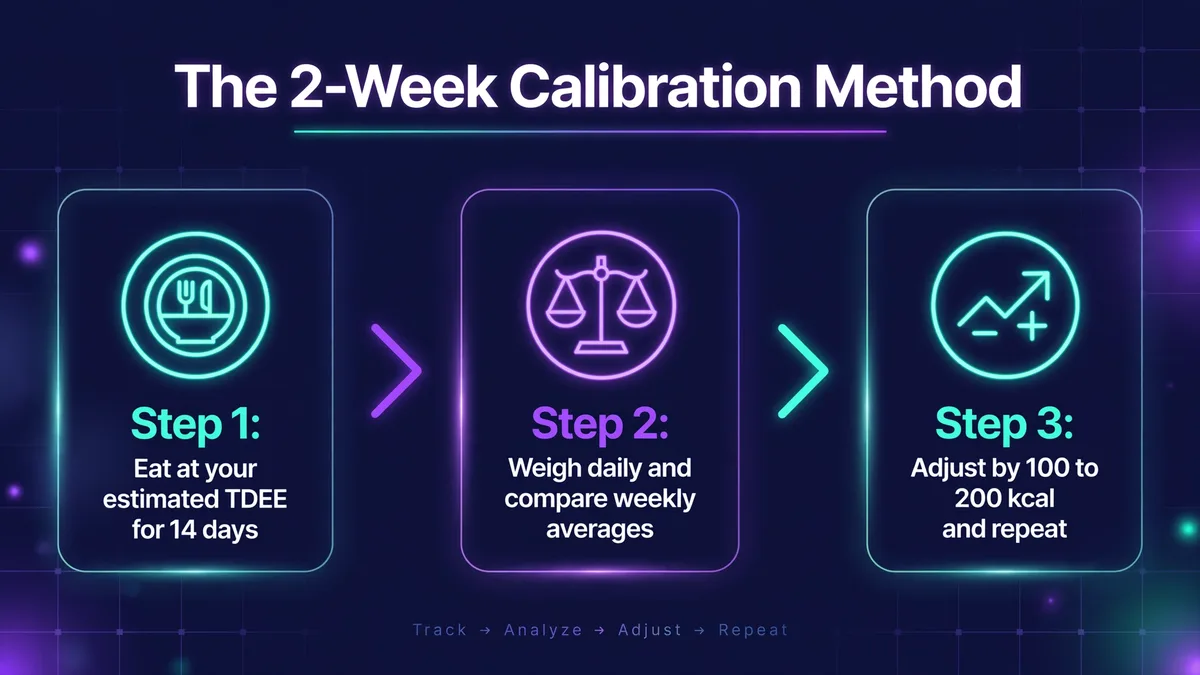
Treat any online calculator as an educated hypothesis. To convert that hypothesis into mathematical certainty, use this simple 2-week scientific calibration protocol:
Step 1: Calculate your estimated TDEE on FreeTDEECalculator.app
Step 2: Eat at that exact target for 14 days, weighing every food item on a digital gram scale
Step 3: Log your body weight every morning upon waking (after using the bathroom)
Step 4: Compute your 7-day average weight for Week 1 and Week 2
How to Interpret Your 2-Week Results:
- Weight remained identical (plus or minus 0.2 lbs):
Your calculated number is your exact biological maintenance TDEE! - Weight dropped by 1.0 lb over 2 weeks:
You were in a 250-calorie daily deficit. Your true TDEE is approximately 250 calories higher than what you consumed. - Weight increased by 1.0 lb over 2 weeks:
You were in a 250-calorie surplus. Your true TDEE is approximately 250 calories lower than what you consumed.
Five Practical Rules to Maximize How Accurate is a TDEE Calculator
- When in Doubt, Choose One Level Lower: If you are undecided between Sedentary and Lightly Active, select Sedentary. It is much easier to add 150 calories if you lose weight too quickly than to stall for a month.
- Weigh Solids, Measure Liquids: Use a digital food scale in grams for all meats, grains, nuts, and cheeses. Measuring cups compress food unevenly.
- Log Cooking Fats and Condiments: Never omit olive oil, butter, mayo, or sauces from your daily food log.
- Use 7-Day Scale Averages: Never react to single-day scale fluctuations caused by water retention, sodium, or bowel movements.
- Recalculate Every 10 Pounds: As your scale weight decreases, your BMR and TDEE decline. Update your numbers regularly to avoid plateaus.
Summary
Ultimately, evaluating how accurate is a TDEE calculator shows online tools are powerful navigational compasses. that provide a reliable baseline within minutes. Use our Free TDEE Calculator as your launchpad, stay conservative with your activity multiplier, track your intake with a food scale, and let the 2-week scale trend guide your adjustments!
This calculator is for informational and educational purposes only and does not constitute medical, nutritional, or health advice. Information presented in this guide is for educational purposes only and should not replace personalized evaluation from a physician or registered dietitian. Always consult your doctor before making substantial changes to your diet or exercise regimen. Read full disclaimer
Calculate Your Accurate Daily Calorie Burn
Stop guessing your metabolic numbers. Use our free, peer-reviewed multi-formula calculator to discover your exact TDEE, BMR, and macronutrient targets in 30 seconds.
🔥 Calculate My TDEE Now →Free Companion Health Calculators
Frequently Asked Questions
How accurate are online TDEE calculators?
Peer-reviewed studies indicate that predictive formulas like Mifflin-St Jeor estimate Basal Metabolic Rate within plus or minus 10% of laboratory indirect calorimetry for approximately 80% of healthy adults. When activity multipliers are added, total TDEE error typically spans 10% to 15% (roughly 200 to 300 calories).
Why do TDEE calculators overestimate calories?
Calculators do not typically overestimate: users overestimate their own physical activity. Selecting Moderately Active when working an office desk job with 3 light gym sessions inflates calculated expenditure by 300 to 500 calories per day.
Are fitness watches (Apple Watch, Fitbit, Garmin) more accurate than TDEE formulas?
No. A landmark Stanford University study evaluating 7 popular wrist-worn activity monitors found that energy expenditure estimation was universally inaccurate, with error rates ranging from 27% to over 90%. Predictive formulas like Mifflin-St Jeor remain substantially more reliable.