⚡ Quick Summary: The Fundamentals of Tracking Macros
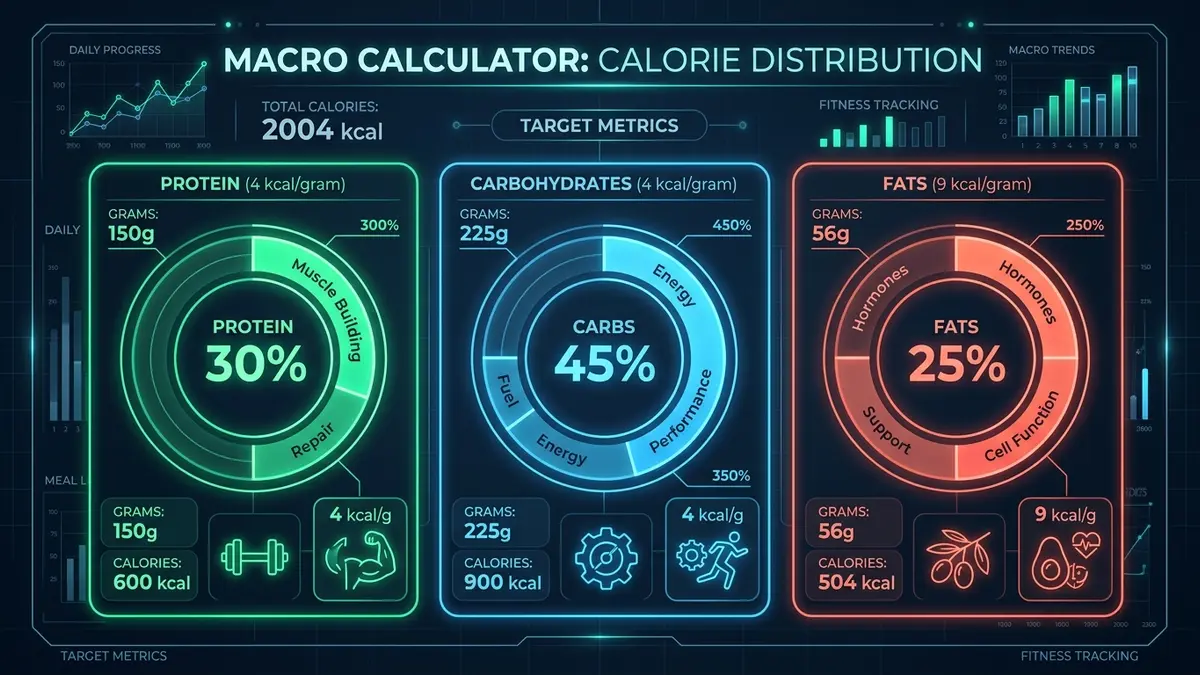
Calories dictate your scale weight, while macronutrients dictate your body composition. Protein (4 kcal/g) repairs muscle and triggers satiety (target 0.8 to 1.0 g per lb). Carbohydrates (4 kcal/g) fuel high-intensity lifting and replenish muscle glycogen. Dietary fats (9 kcal/g) regulate testosterone and steroid hormone synthesis (keep at or above 20% to 25% of total calories). For active fat loss, a High Protein split (40% Protein, 30% Carbs, 30% Fat) optimizes muscle retention.
Why Track Macronutrients Instead of Just Calories?
In nutritional science, there is a fundamental law: calories determine the direction of scale weight, while using a macro calculator determines your body composition. If you eat in a 500-calorie daily deficit but consume inadequate protein, your body will readily catabolize precious skeletal muscle tissue alongside fat to meet its amino acid requirements. You may end up lighter on the scale, but with a softer physique, a slower resting metabolic rate, and reduced physical strength.
Conversely, by configuring targets with our free macro calculator, you ensure that every calorie consumed serves a targeted biological purpose: repairing damaged myofibrillar proteins, replenishing depleted intramuscular glycogen stores, supporting cell membrane fluidity, and synthesizing critical endocrine hormones.
Governs thermodynamic energy balance. Dictates whether total body mass increases, decreases, or maintains over time.
Directs biological nutrient partitioning. Dictates whether lost weight comes from adipose fat tissue or skeletal muscle tissue.
How Our Macro Calculator Evaluates the Three Macronutrients
All dietary energy is derived from three primary chemical compounds. Understanding their distinct metabolic roles allows you to construct a nutrition plan tailored to your lifestyle:
1. Dietary Protein 4 Kilocalories Per Gram
Composed of chains of amino acids joined by peptide bonds. Nine of these are essential amino acids (EAAs) that must be supplied through diet.
- Muscle Protein Synthesis (MPS): Leucine triggers intracellular mTOR pathways, stimulating repair and muscular hypertrophy following lifting.
- Highest Thermic Effect: Requires 20% to 30% of its caloric value just to digest, transaminate, and assimilate.
- Powerful Satiety: Stimulates gut hormones PYY and GLP-1 while suppressing hunger hormone ghrelin.
2. Dietary Carbohydrates 4 Kilocalories Per Gram
Saccharide molecules that hydrolyze into glucose monomers, providing the human body with its most efficient anaerobic fuel for cellular ATP resynthesis.
- Glycogen Replenishment: Stored in muscle (400 to 500g) and liver (80 to 100g), maintaining intra-muscular hydration and physical power.
- Anaerobic Glycolysis: Resistance workouts and high-intensity sprints depend directly on fast glycolytic fuel.
- Thyroid & Leptin Support: Adequate carbohydrate availability sustains circulating T3 thyroid output and leptin signaling.
3. Dietary Fats 9 Kilocalories Per Gram
Hydrophobic lipid molecules providing more than double the caloric density of protein and carbs. Indispensable for endocrine and structural health.
- Hormone Biosynthesis: Serves as the biochemical precursor for steroid hormones, including testosterone, estrogen, and progesterone.
- Micronutrient Absorption: Fat-soluble vitamins (A, D, E, K) require dietary lipid micelles for intestinal absorption.
- Cell Membrane Integrity: Essential Omega-3 and Omega-6 fatty acids construct phospholipid bilayers across every cell membrane.
The Protein Leverage Hypothesis
Reflected in our macro calculator, the Protein Leverage Hypothesis posits that the human appetite control system has a strong biological drive to consume a fixed absolute target of dietary protein.
When people consume ultra-processed diets low in protein percentage (such as standard Western diets containing only 10% to 12% protein), their subconscious appetite mechanisms drive them to overconsume total calories until their minimal daily amino acid requirement is satisfied. By consciously structuring your meals around high-protein whole foods (reaching 25% to 35% of total calories from protein), you naturally switch off primal hunger signals, making fat loss adherence straightforward and sustainable.
Choosing Your Optimal Macronutrient Split
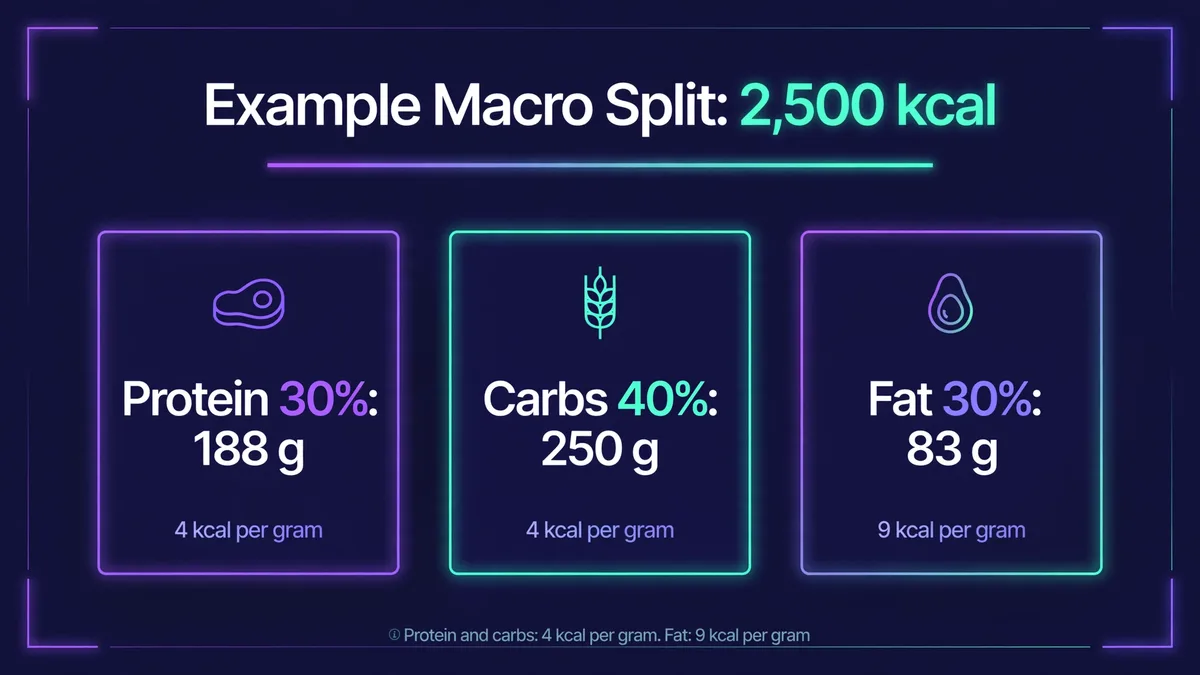
Our macro calculator provides calibrated distributions designed for specific physical objectives and metabolic profiles:
| Protocol | Ratio (P / C / F) | Ideal Use Case & Metabolic Benefit |
|---|---|---|
| Balanced | 30% / 40% / 30% | General fitness, recreational athletes, and long-term sustainable weight maintenance. |
| High Protein Cut | 40% / 30% / 30% | Gold standard for active fat loss. Maximizes muscle retention and dietary thermogenesis. |
| Low Carbohydrate | 40% / 20% / 40% | Sedentary lifestyles, desk jobs, or individuals with insulin resistance seeking stable blood sugar. |
| Ketogenic | 20% / 5% / 75% | Carbohydrates limited to < 30-50g/day to induce hepatic beta-oxidation and nutritional ketosis. |
Carbohydrate Cycling and Nutrient Timing Strategies
Once numbers are generated by our macro calculator, advanced trainees can optimize results using nutrient timing:
- Peri-Workout Nutrition: Consume 20% to 30% of daily carbs and 25 to 40g of protein 60 to 90 minutes pre-workout, with a matching post-workout meal within two hours to maximize glycogen synthesis.
- High and Low Carb Cycling: On heavy lifting days (legs/back), increase carbohydrates and moderate dietary fats. On rest days, lower carbohydrates and increase healthy fats to maintain deficit integrity while supporting gym performance.